Apicoectomy
A surgical procedure that removes the tip of a tooth root when infection persists after a root canal.

expert endodontic specialists
Preserve your natural teeth and live free from discomfort.

What Is endodontics?
Endodontics focuses on diagnosing and treating issues within the soft tissue inside your teeth (the dental pulp). At Comfort Dental, our providers use modern tools and compassionate care to treat complex internal tooth problems while helping patients preserve their natural teeth whenever possible. Whether you're suffering from tooth pain or have been told you may need a root canal, our experienced team is here to guide you through your options and get you out of discomfort quickly.
Endodontics focuses on treating problems inside the tooth, most commonly through root canal therapy. When the inner pulp is damaged by deep decay, cracks, or injury, it can cause pain and infection. Treatment removes the infected tissue, cleans and seals the tooth, and can often preserve it with a crown. Endodontic care can also address dental trauma, abscesses, and other conditions to help prevent extraction.
Discount Plan
Flexible payment options and Gold Plan savings make treatment accessible.
Explore the Gold PlanADDITIONAL CARE
A surgical procedure that removes the tip of a tooth root when infection persists after a root canal.
Sometimes, a root canal-treated tooth may not heal properly or become reinfected. Retreatment can resolve the issue.
Common in pediatric patients, this procedure involves removing part of the pulp in a baby tooth to relieve pain or stop decay.
Teeth that have been injured due to accidents or sports may need endodontic evaluation to preserve long-term health.
CONDITIONS & SYMPTOMS
Recognizing symptoms early can help you seek treatment before a more serious complication arises.
To hot or cold, even after the source is removed.
Spontaneous pain in a specific tooth.
Or when touching the tooth.
Or tenderness in nearby gums.
Darkening of a single tooth.
A small pimple-like bump near a tooth root.
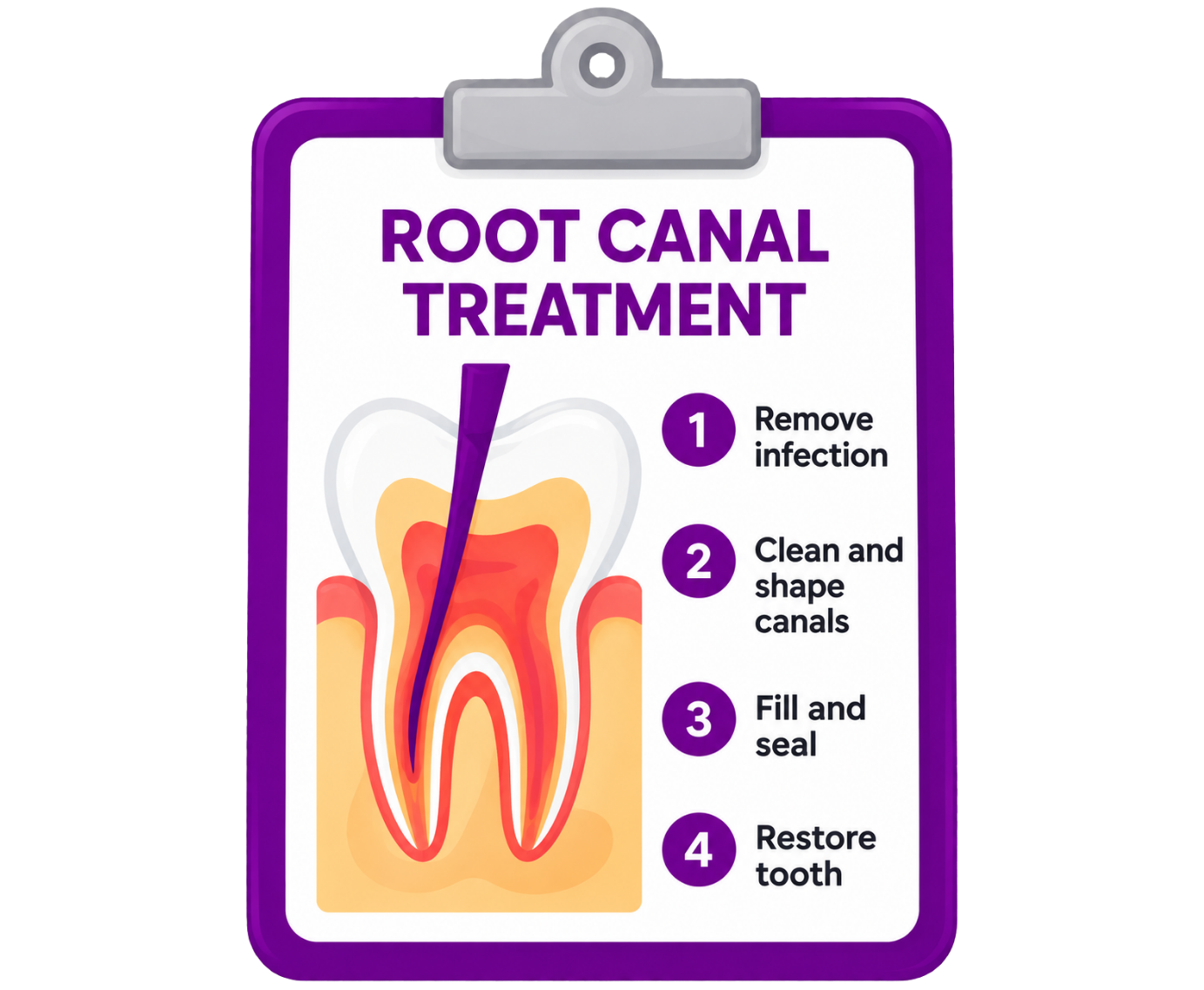
Root canal therapy is the most well-known procedure within endodontics. While it has a reputation for being uncomfortable, modern techniques have made root canals comparable to getting a routine filling.
The procedure involves removing the infected or damaged pulp, cleaning and disinfecting the inner canals, and sealing the tooth — often followed by a crown. Most patients return to normal activity the next day with minimal discomfort.
Choosing endodontics over extraction has many advantages.
Saving your natural teeth helps you maintain your normal bite, prevents shifting of neighboring teeth, and preserves jawbone density.
Resolves infection and relieves pain quickly.
Keeps your normal bite and appearance intact.
Long-term, predictable results.
Than surgical alternatives like extraction.
conditions treated
After an endodontic procedure, it’s normal to experience some tenderness for a few days.
Tenderness can usually be managed successfully with over-the-counter pain medications.
You should avoid chewing on the treated tooth until it has been restored with a permanent filling or crown.
Proper follow-up care, good oral hygiene, and regular dental checkups are essential to maintaining your treated tooth.
Your comfort and dental health are our priorities. Endodontics can restore your smile, relieve pain, and help you avoid unnecessary tooth loss.